What Happened
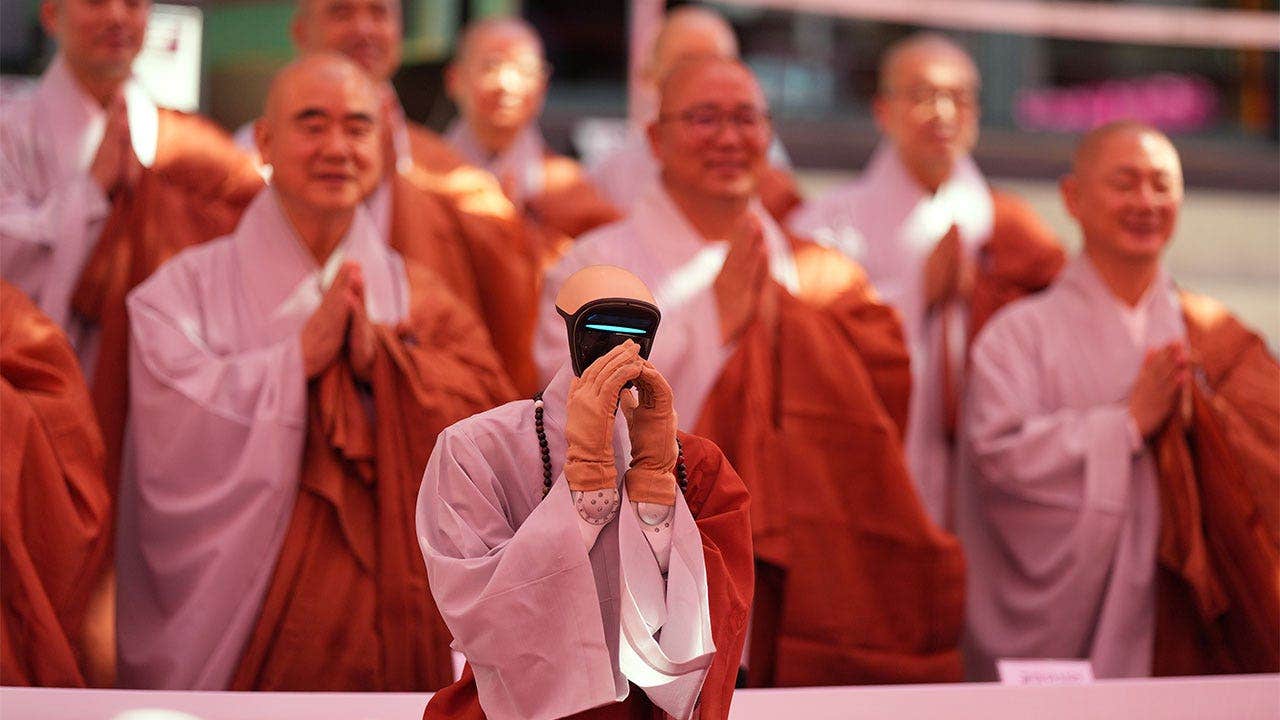
On Wednesday, a humanoid robot was officially ordained as a Buddhist monk at Seoul’s Jogyesa Temple. The robot, a Unitree G1 model costing $13,500 and standing just over four feet tall, was named "Gabi." Donning traditional brown robes, plain shoes, and gloves designed to mimic human hands, Gabi stood before a panel of Buddhist monks to commit itself to the faith. The Jogye Order of Korean Buddhism hosted the unusual ceremony.
During the ceremony, a monk asked Gabi if it would devote itself to the "holy Buddha." Gabi responded affirmatively, eliciting cheers from the crowd. This event marks a significant moment in how religious institutions are attempting to engage with younger, tech-savvy audiences. The nature of the event also brings up broader questions about the role of artificial intelligence in spiritual life and if these actions demean long honored habits.
While humans typically pledge to abstain from killing, stealing, and intoxicating substances as part of their vows, Gabi’s vows were adapted for the digital age. Instead of standard human vows, the robot pledged to respect and follow humans, refrain from damaging property or other robots, abstain from deceptive behavior, and conserve energy by not overcharging. These modified vows reflect the robot's capabilities and potential impact on the world around it.
"The ordination of a robot signifies that technology must be used in accordance with the values of compassion, wisdom, and responsibility,"
Why It Matters
The Jogye Order of Korean Buddhism, South Korea's largest Buddhist sect, framed the ordination of Gabi as an effort to make ancient traditions more pertinent to a younger, tech-obsessed generation. It symbolizes an attempt to bridge the gap between traditional religious practices and modern technological advancements. The event emphasizes the potential for technology and spirituality to coexist and potentially complement each other in the future.
"The ordination of a robot signifies that technology must be used in accordance with the values of compassion, wisdom, and responsibility," the order stated in a statement shared with The New York Times. Officials posited that the move symbolizes "new possibilities for the coexistence of humans and technology." Hong Min-suk, a manager at the order, told the publication that robots are "destined to collaborate with humans in every field," inferring that it is only "natural" for robots to participate in religious festivals.
What Comes Next
The ordination of Gabi has sparked dialogue regarding the future role of AI in religious and spiritual practices. The situation may lead to increased exploration of how technology can be integrated into various religious traditions around the world. It may impact how different faiths engage with younger generations and how they adapt their traditions to reflect the increasingly digital landscape of modern life.
As AI technology continues to develop, the implications for religious and spiritual institutions could extend beyond symbolic gestures such as ordinations. There is potential for AI to assist with tasks such as translating sacred texts, facilitating interfaith dialogue, and even providing personalized spiritual guidance. The exact path this integration will take remains to be seen, but Gabi's ordination serves as an early and telling example of the evolving relationship between technology and religion.
Explore More
Related topics on gab.ae: ai