What Happened
India's ruling Hindu nationalist party, the Bharatiya Janata Party (BJP), has made significant inroads in the state of West Bengal, a traditionally opposition-held region. Partial results released by the Election Commission of India indicate that the BJP has secured at least 124 seats in the 294-member West Bengal assembly and is leading in 83 other constituencies. Final results are anticipated later Monday, but the current figures suggest a major shift in the state's political landscape.
This election marks a significant milestone for Modi's party, which has been working to dislodge the All India Trinamool Congress government led by Chief Minister Mamata Banerjee for several years. West Bengal is a politically influential state where Banerjee, a prominent critic of Modi, has held power since 2011. The results highlight the BJP's growing influence in a region where it has historically struggled to gain a foothold.
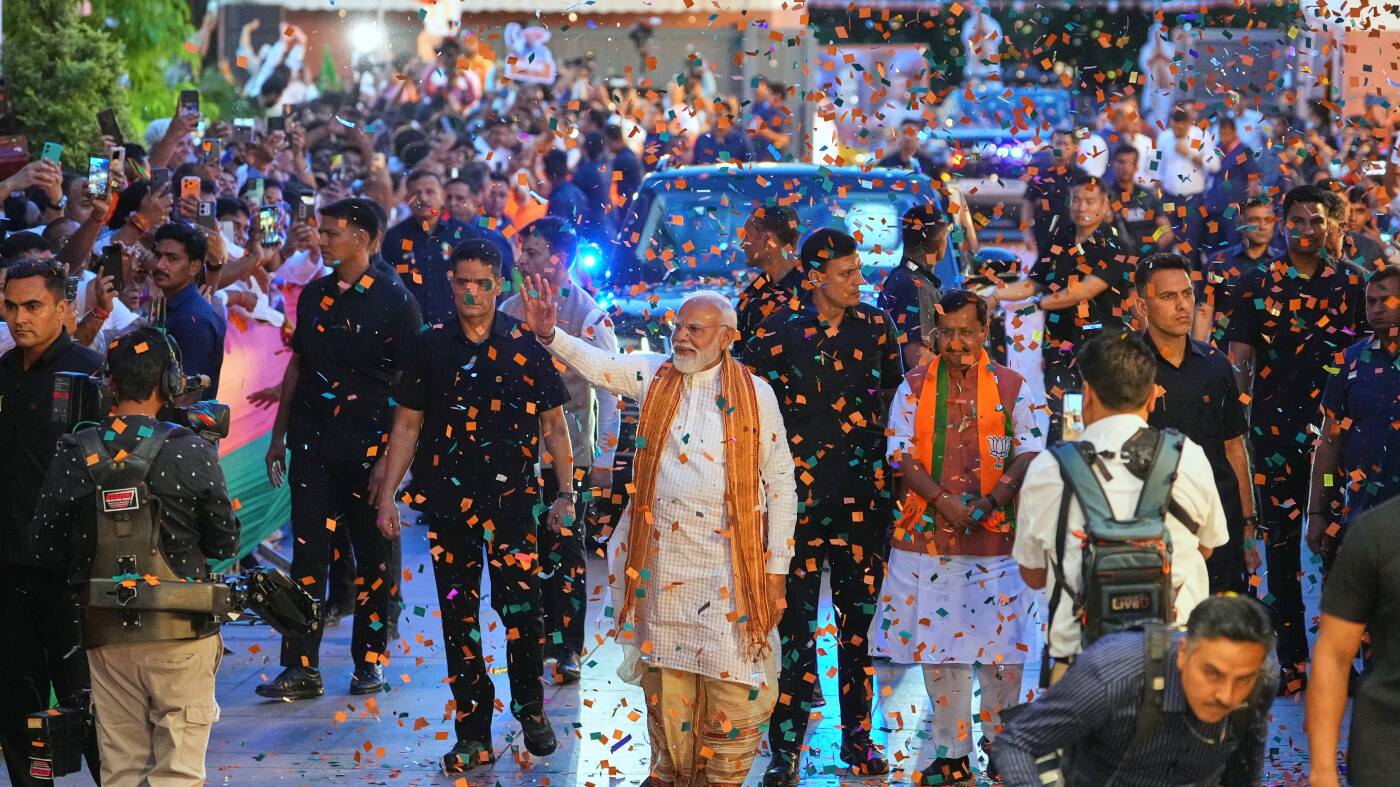
"A new chapter has been added to Bengal's destiny," Modi told a cheering crowd at BJP headquarters in New Delhi.
Why It Matters
The outcome in West Bengal is expected to bolster Narendra Modi's political standing and consolidate his position as he navigates the midpoint of his third term as Prime Minister. The 2024 national election saw Modi's ruling party forced to rely on regional allies to form a stable government. This victory signals a potential resurgence in the BJP's popularity and a broader expansion of its influence across India.
The results also have implications for the Indian opposition. Mamata Banerjee had emerged as a key figure uniting regional parties against the BJP. Her defeat is anticipated to diminish her standing within an opposition bloc already facing internal divisions and regional power struggles. India's opposition parties have struggled to mount a cohesive and sustained challenge to the BJP's dominance at the national level, and the West Bengal election result is likely to exacerbate these challenges.
What Comes Next
With the BJP's increased presence in West Bengal, the political dynamics of the state are expected to undergo a significant transformation. The party is likely to focus on consolidating its gains and strengthening its organizational structure in the region. This could involve implementing new policies, attracting local leaders, and addressing regional concerns to further solidify its support base.
Looking ahead, Modi is expected to seek a record fourth term in 2029. The results in West Bengal, along with other future state elections, will be closely watched as indicators of the BJP's continued strength and the broader political landscape of India. The opposition's response to these results will also be crucial in shaping the future of Indian politics. Details are still emerging regarding the long-term strategy and potential shifts in political alliances.
Explore More
Related topics on gab.ae: ai