What Happened
In Norway, metal detectorists uncovered what has been described as the largest Viking Age silver coin hoard ever found in the country. The discovery took place near the village of Rena, located in Innlandet County, a largely rural region. The find initially began when two private citizens detected a smaller cluster of 19 silver coins on April 10, which prompted a wider archaeological investigation.
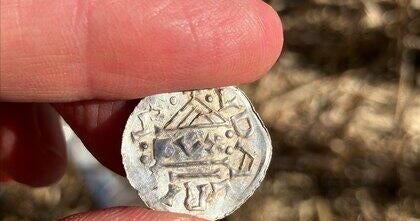
During the ensuing search, more than 3,150 coins have since been recovered, although officials say the operation to locate additional coins is still ongoing. The hoard was found buried in a field, preserving a vast collection of coins that date back to the late 10th and early 11th centuries—one of the most turbulent eras in Norway's history. The coins offer tangible ties to the Viking Age and the country's expanding trade and political environment.
Experts from the University of Oslo's Museum of Cultural History have analyzed the coins and found they predominantly came from England and Germany. Some coins also originated from Denmark and Norway itself. The coins were minted during the reigns of notable rulers such as England's Cnut the Great and Ethelred II, Rome's Otto III, and Norway's King Harald Hardrada.
"This is an extraordinary discovery of a kind one might experience only once in a career," said archaeologist May-Tove Smiseth.
Why It Matters
The discovery is significant as it sheds light on an era of Norwegian history marked by political upheaval, power shifts, and the wealth generated by Viking expeditions. According to Innlandet County officials, the hoard illustrates the dominance of foreign currency in Norway prior to the reign of Harald Hardrada, who ascended to power in 1046 C.E.
The coins' diverse origins underline extensive trade networks during the Viking Age, reflecting Norway's economic interactions beyond its borders. For historians and archaeologists, this find offers rare insights into currency circulation, wealth accumulation, and the geopolitical dynamics at the time. Such a concentration of Viking Age coins is a priceless resource to better understand the economic and cultural landscape of early medieval Scandinavia.
What Comes Next
Archaeologists and researchers will continue excavating and studying the site to uncover more coins or artifacts that could further illuminate the historical context of the hoard. Experts at the University of Oslo will likely continue detailed examinations of the coins to determine their precise origins, minting processes, and circulation patterns.
The discovery has sparked excitement within the archaeological community and promises to attract scholarly attention internationally. Officials hope the find will also bolster public interest and appreciation for Norway’s Viking heritage. Plans may include museum exhibitions or public showcases to allow Norwegians and visitors alike to experience this extraordinary window into the past.